Where purpose-bred meets uncompromising health, longevity, temperament, structure, and beauty—creating dogs of unmistakable presence, steadfast loyalty, and a standard that accepts nothing less.
“Our long-term commitment is to protect the Doberman we love — not just for today, but for the generations that follow.”
Bonds Dobermans is a Doberman breeding program based in Georgia dedicated to health testing, genetic diversity, and longevity. Every pairing is guided by COI analysis, genomic diversity data, and a commitment to producing dogs that thrive.
Every decision we make begins with a question: what does this breed need to endure? Not just to win in the ring, but to live longer, healthier, and more fully connected to the people who love them.
We reach across bloodlines, borders, and generations — because the Doberman, and their people, deserve nothing less.
Our mission is to produce versatile Dobermans that excel as confident companions and competitive show dogs – dogs that are steady, intelligent, and deeply connected to their people. But more than that, our work is rooted in a long-term commitment to restoring vitality, longevity, and resilience within the breed. Through intentional selection, thoughtful pairing, and a willingness to look beyond convention, we aim to produce dogs that not only succeed today – but endure for generations.
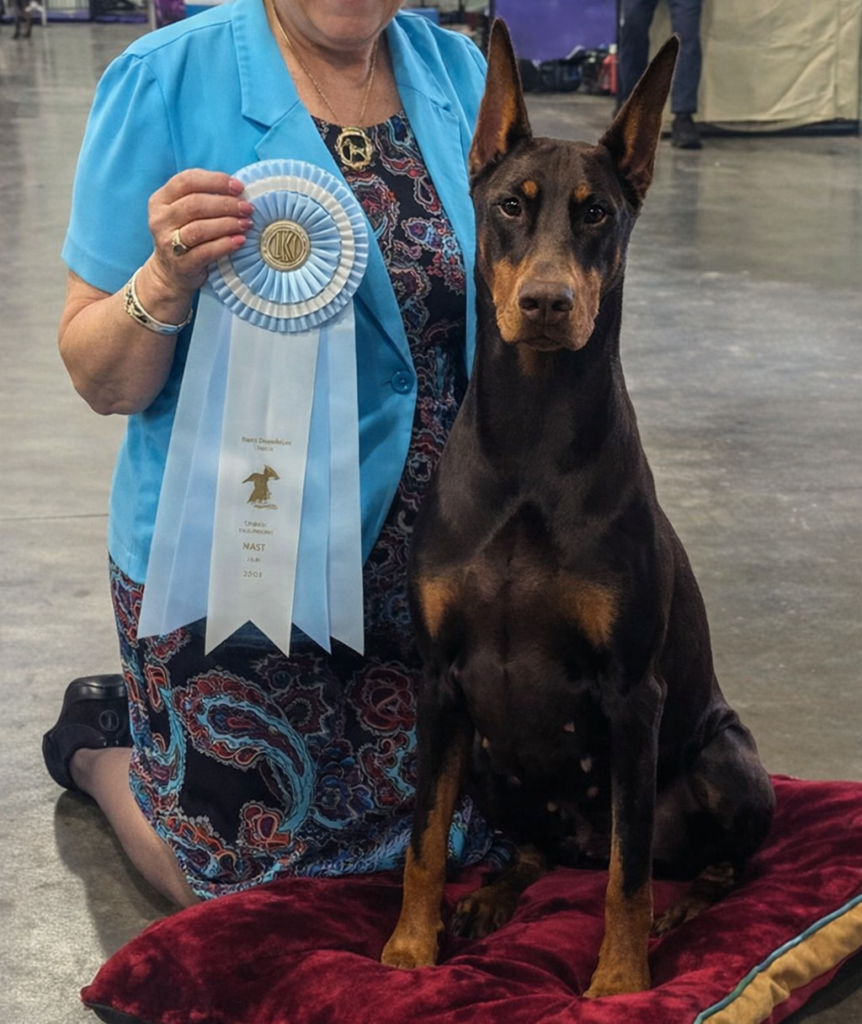
“By introducing genetic breadth, we are essentially slowing down the biological clock.”
– Dr. Carol Beuchat
Expanding the Genetic Horizon Guided by the work of Dr. Jerold Bell and Dr. Carol Beuchat—leaders in canine genetic diversity—we are intentionally pursuing a path few have taken. By triangulating genetics from geographically distancing and historically isolated lines:
• US / South American
• Australian
• American / European (in progress)
• Carefully selected international bloodlines – we introduce genetic breadth untouched by the bottlenecks shaping domestic lines.
This Is Not Outcrossing. This Is Genetic Renewal.
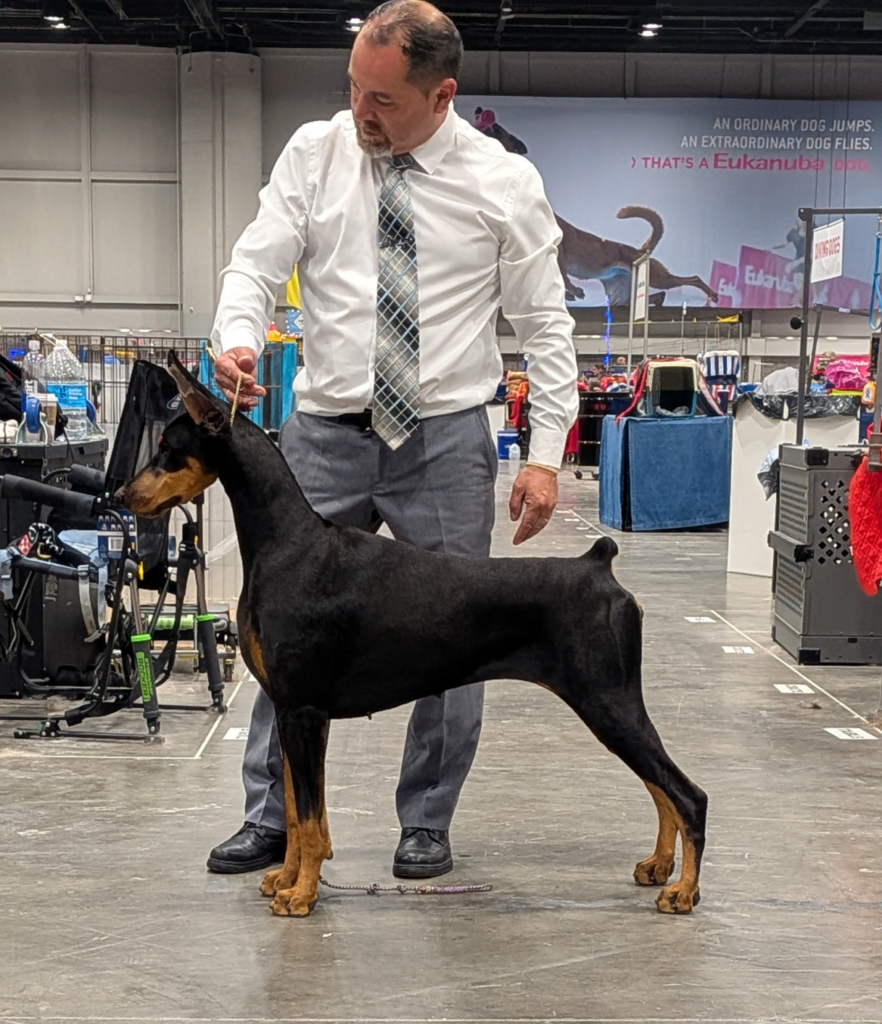
We are building a stronger genetic foundation by introducing:
🧬 Fresh alleles that unlock heterozygosity
💪 Restored immune strength and resilience
🌱 Longer lifespans through true diversity
🔥 The hardy, enduring vitality the breed was built on
From Breeder to Architect -We are making a deliberate shift—from breeder to research-informed architect of the breed. -Our foundation will always be our exceptional bitches—the repeatable “X-factor” that carries the maternal strength of the program. We pair them with carefully selected sires chosen to deliver what is missing: structure, drive, temperament, and untapped genetic breadth.
By strengthening the maternal foundation with distant bloodlines, we ensure vitality carries forward – not just for one generation, but for many.
Built for the Long Game: towards geographically distant breeding that “triangulates” three or more genetically diverse parental populations to maximize heterozygosity, leveraging hybrid vigor (heterosis) and enhancing overall vitality. We are moving beyond the “Art of the Eye” and embracing the “Science of the Soul” – where health, structure, correctness, and longevity are no longer separate goals. We are not breeding for a moment. We are breeding for future, long-term impact.
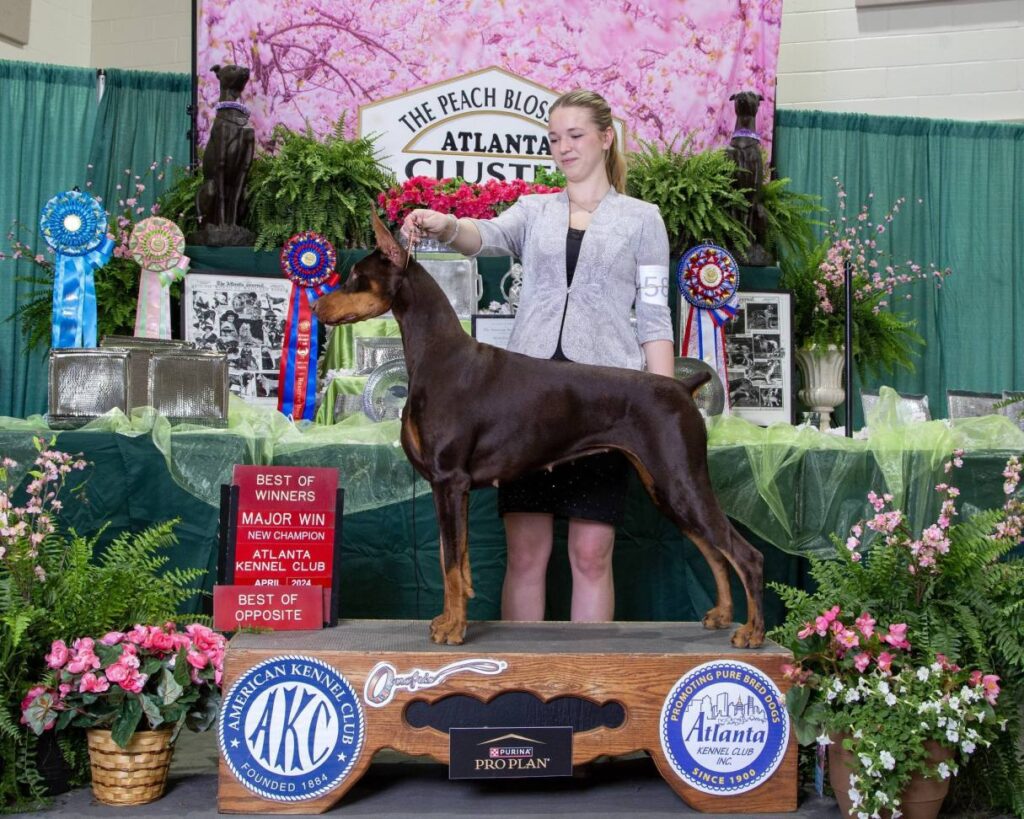
Where Health, Beauty, and Longevity Align This is the beginning of a self-sustaining program where health, diversity, and correctness are no longer in conflict—they are one and the same.
This is the ignition point. This is where the fire returns. Welcome to the future of the Doberman. Welcome to Bonds
At Bonds Dobermans, this principle is applied through structured genetic triangulation—bringing together multiple, geographically and genetically distant lines to expand diversity while maintaining breed integrity.
Every pairing is guided by rigorous health testing, COI analysis, and genetic diversity data.
We are breeding for a dog’s 13th and 14th birthday — not just the next show weekend.
A self-sustaining program where health, diversity, and correctness are one and the same thing.
The principles of genetic diversity, heterozygosity, and hybrid vigor (heterosis) are well-established across population genetics, animal breeding, and agricultural science. The following research supports the concepts applied within the Bonds Triangulation Framework™.
Hybrid vigor (heterosis) & genetic distance
Hybrid vigor describes the improved performance of offspring compared to parent populations, often resulting in increased growth, fertility, and resilience. Studies consistently show that greater genetic distance between parent populations can increase heterosis, though optimal outcomes depend on maintaining balance and compatibility between lines.
Cross-breeding and enhanced fitness
Cross-breeding between genetically distinct populations has been shown to produce offspring with enhanced fitness, including improved disease resistance and overall vitality.
Geographic isolation & subpopulation differentiation
Geographic isolation between dog populations results in measurable subpopulation differentiation. US populations show higher genetic distance and measurably lower heterozygosity than their European counterparts — primarily due to founder effect.
Inbreeding depression & heterozygosity
Breeding for heterozygosity reduces the risk of inbreeding depression, where accumulation of deleterious mutations leads to lower individual fitness — including smaller litters, reduced lifespan, and increased mortality in offspring.
Heterosis vs. outbreeding depression
The net fitness consequences of between-population crosses are a balance between heterosis and outbreeding depression. Within a single breed, outbreeding depression is far less of a concern because breed standards establish a shared developmental blueprint.
Primary scientific literature and institutional resources supporting the Bonds Triangulation Framework™.
"Dogs from the breadth of the gene pool should be used for breeding as long as they represent health and quality. The most common genetic diseases seen by veterinarians are due to ancient liability genes that originated in ancestors that preceded the separation of breeds."
— Dr. Jerold Bell, DVM, Adjunct Professor of Genetics, Tufts UniversityDr. Jerold Bell, DVM — Genetic diversity management and breed-wide health strategy. Adjunct professor of genetics at the Cummings School of Veterinary Medicine at Tufts University and genetics advisor to national parent breed clubs.
Dr. Bell — Genetic Diversity Management (VIN) ↗
"The loss of genetic diversity can pose a threat to breed health. Breeding practices such as extreme selection for competition winners or restricted pedigrees accelerate population fragmentation and inbreeding."
— Dr. Carol Beuchat, PhD, Institute of Canine BiologyDr. Carol Beuchat, PhD — Preservation of genetic variation and population sustainability. Founder of the Institute of Canine Biology, member of the IUCN Conservation Breeding Specialist Group.
These principles consistently point to one conclusion: Genetic diversity is not maintained by staying within the same lines — but by intentionally expanding beyond them.
The Bonds Triangulation Framework™ applies this research through structured, multi-line breeding strategies designed to:
"Distance creates strength. Triangulation is not a trend — it is the science of building dogs that last."
— Bonds Dobermans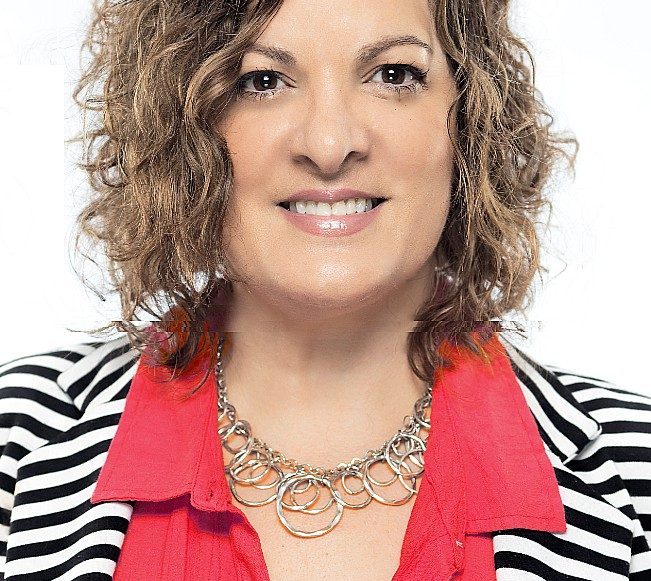
Written by
Doberman Breeder & Genetic Diversity Advocate · Guyton, Georgia
Bonnie Gringer is the founder of Bonds Dobermans, a purpose-bred program based on the coast of Georgia dedicated to health testing, genetic renewal, and extended longevity in the Doberman breed. With over 15 years of experience in purpose breeding across Friesian horses and Dobermans — including international bloodline import and pedigree research — Bonnie brings both scientific rigor and deep personal commitment to the future of the breed.